
SKNK Technical Guide
How to Rent IPv4 Addresses: /24 Pricing, Deployment Options, and What to Check
Need a public IPv4 block? Learn what a /24 lease includes, what it costs, which routing and reputation checks matter, and when leasing is the wrong fit.
Technical content
Written and maintained by Shikanoko NetworksRent or buy is the wrong first question. The right first question is whether you need to use addresses or hold them. IPv4 leasing answers the first need and deliberately not the second: you get a time-limited right to use a block, the registration stays with its holder, and the whole arrangement — price, reputation checks, renewal, exit — is built around that fact.
Most confusion in IPv4 rental comes from reading a lease as if it were a purchase with a monthly bill. It is not. This guide walks through who rents, what a /24 actually delivers, what it costs, what to check before you sign, and when renting is the wrong tool for the job.
Definition Box: An IPv4 lease is a fixed-term right to use a registered IPv4 block. It does not transfer ownership or the registry relationship: the resource holder keeps the inetnum and its RIR records, and grants the lessee contracted use for the term.

A lease gives you time-limited use of an address block; it does not move ownership or the registry relationship.
1. What IPv4 Leasing Is — and What It Is Not
Leasing is one of several ways to get public IPv4 into your network, and it sits between "borrow" and "buy":
| Arrangement | What you receive | What you keep when you leave |
|---|---|---|
| IPv4 transfer / purchase | Registration of the block after an approved transfer under the applicable RIR policy | The addresses |
| IPv4 lease | Contracted use for a fixed term | Nothing — for a non-portable PA lease, if not renewed, the block usually returns to the holder and you may need to renumber |
| ISP-provided space | Use tied to your connectivity | Nothing — you renumber |
| Cloud-provided addresses | Use bound to cloud resources | Nothing — released with the resource |
Two boundaries matter more than any feature list. First, a lease does not transfer ownership: for the whole term the block remains registered to its holder, and you hold a use right defined by contract. Second, "use the addresses" and "announce them on the Internet" are separate capabilities. You can hold a lease, configure servers, and still not be globally reachable if the routing records and upstream acceptance are not in place. If you want the full background on why addresses are leased at all, start with What Is IPv4?; the sub-/24 routing mechanics are covered separately in IPv4 Leasing Below /24.
2. Who Rents IPv4, and Why
Renting is a fit when the need is time-bound, the block is small, or buying is not worth the upfront cost. The cases that keep recurring:
- Hosting, VPS, or cloud providers that have exhausted their allocated space and need more public addresses for new customers or machines.
- IPv4-only services migrating to dual-stack that still need public IPv4 for the legacy leg while IPv6 comes up.
- Temporary projects — a launch, an event, a migration window — where buying a block for a few months makes no sense.
- A network team that needs a complete
/24for a full-prefix BGP deployment, rather than scattered single addresses from a provider.
If your requirement is one of the first three, a lease is often a practical option — but the final cost depends on the prefix size, term, routing model, and included services. If it is the last one, leasing may work only if the provider supports the required routing model and authorizes your origin — which the next section covers.
3. What a /24 Lease Actually Delivers
A /24 is 256 addresses. Read as a LAN subnet, that is 254 assignable hosts after the network and broadcast addresses come out; read as a routing prefix, it is a common practical boundary for broad IPv4 propagation, but not a guarantee of global reachability. The distinction between "256 addresses" and "256 usable servers" is worth keeping straight, and What Is an IP Prefix? has the mechanics.
The bigger gap is between having the block and being reachable through it. Four things that listings often fold into one word are in fact independent:
| Capability | What it means | Who decides it |
|---|---|---|
| Use the addresses | Assign them to your infrastructure | Your contract |
| Announce the prefix | Originate it in BGP | Your router + your upstream |
| Be authorized to originate | ROA and IRR records match your ASN | The resource holder / LIR |
| Be globally reachable | Other networks accept and propagate the route | Every network in the path |
A lease gives you the first row by contract. The other three have to be built and authorized separately, and none of them is implied by the others. A ROA that declares your ASN as the intended origin does not make every network carry the route; an IRR route object that records your routing intent does not override an upstream's prefix filter. For the sub-/24 version of this exact trap, IPv4 Leasing Below /24 pulls it apart in detail.
Deployment, in practice, comes down to three shapes:
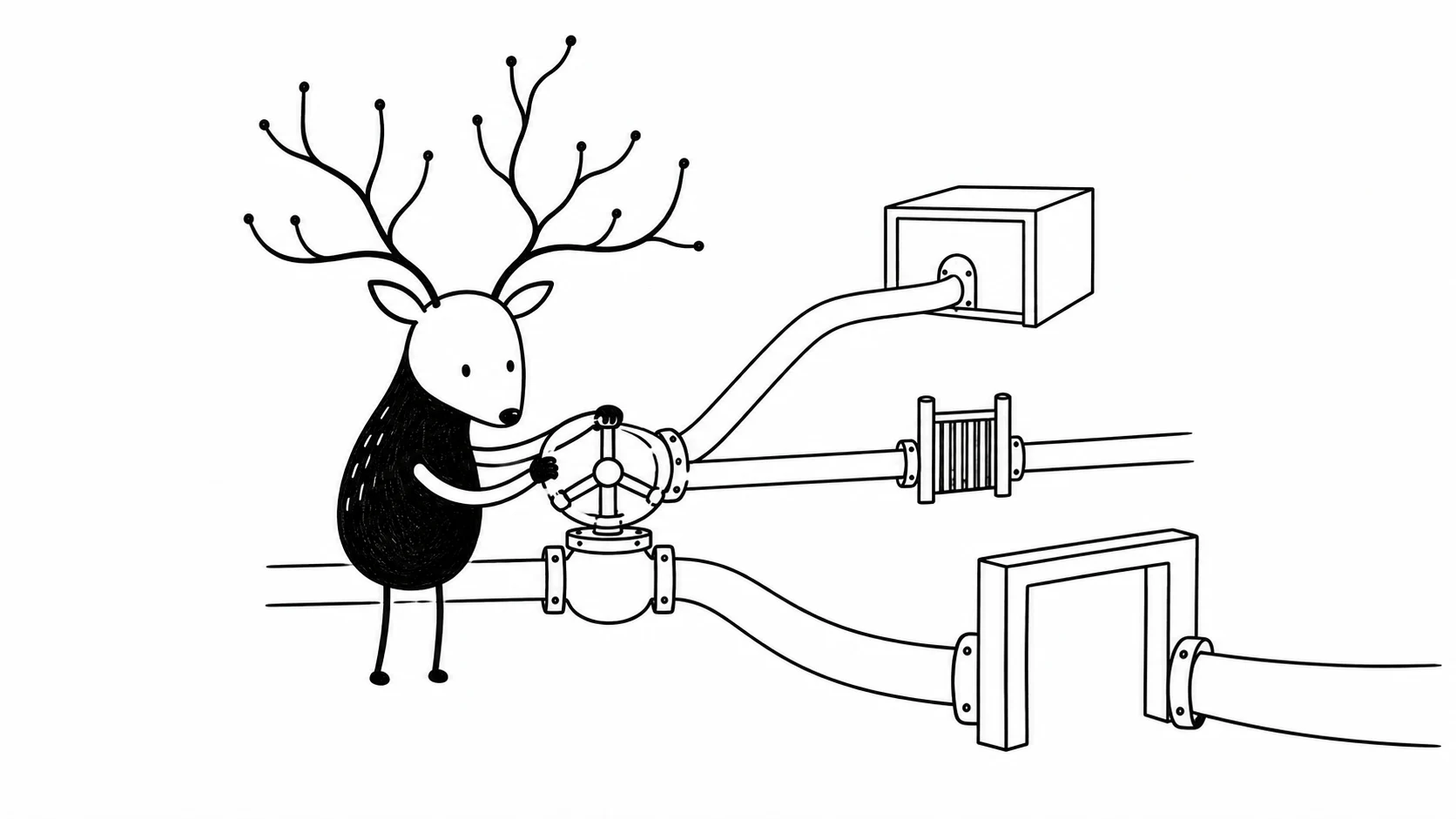
The delivery model determines who originates the route, what you control, and how widely it may propagate.
| Deployment | Origin ASN | What you control | Typical for |
|---|---|---|---|
Provider announces the /24 |
Provider | Subnets, servers, services | Simplicity, no BGP of your own |
| You announce via your own upstream | Your ASN | Router config, origin, upstream choice | Your own ASN + routing |
| Use without BGP (NAT pool, server assignments) | n/a | Addressing only | No public routing of your own |
The middle row is the one people mean when they say "announce with my own ASN." The resource holder authorizes the origin; the holder or an authorized maintainer creates and maintains the ROA and IRR records.
4. What a /24 Costs
SKNK lists a /24 lease at €450 per quarter or €1,580 per year, as shown on the pricing page. The annual term is the cheaper path: four quarters would run €1,800, so paying annually saves about €220 — roughly 12%.
Three notes sit alongside that price, and all three matter more than the number itself:
- VAT is excluded. Prices are shown in EUR and exclude applicable VAT, which is calculated at checkout depending on your location and VAT status.
- Availability and reputation are checked. A
/24is not an off-the-shelf SKU. Each request is subject to inventory and IP reputation review before it is offered. - Ownership is not transferred. It is a lease only; the registration stays with the holder for the duration.
These are SKNK's published list prices for a /24, not a market average — other providers price differently by region, reputation, and minimum term. Treat any single vendor's number as a starting point, not a benchmark.

The address lease and optional routing or managed services are separate parts of the quote.
Need a
/24IPv4 block for your network? Check current availability, IP reputation, routing requirements, and lease terms with SKNK via the IPv4 leasing enquiry.
5. Check Before You Order
Walk this list before signing. Each item can quietly derail a lease that looks fine on paper.

Check the block, the routing records, and the exit terms before the price becomes the only thing you see.
The block itself
- The specific range and its IP reputation. Ask for the exact block, not a placeholder, and check it against public blocklists, abuse feeds, and mailing reputation. Reputation is not a binary "clean" flag — it is shaped by the block's history, rDNS, and traffic behavior, and it follows the addresses, not the lease.
- RBL, abuse, and mail limits. If you plan to send mail, confirm current blacklist status, who handles delisting, and whether port 25 is usable.
The routing records
- rDNS and GEO. Who controls reverse DNS for the block, and can geolocation data be corrected if it points somewhere wrong?
- Your own ASN and BGP. Will the holder authorize your ASN as origin, and can matching ROA and IRR records be created?
- ROA, IRR, LOA maintenance. Who creates and maintains these, and what is the
maxLengthon the ROA? A wrongmaxLengthcan turn a valid-looking lease intoInvalidunder origin validation.
The contract terms
- Minimum term, renewal, exit, renumbering. How long is the minimum, what happens at the end, and are you expected to renumber on exit?
- What is and is not included. Confirm whether transit, BGP configuration, or technical support is part of the deal. Under SKNK's published standard scope, BGP configuration, transit, and managed routing are not included unless separately agreed in writing — upstream selection and router configuration stay with the customer.
6. When Leasing Is the Wrong Tool
Leasing is a poor fit in three situations, and none of them is visible in the price:
- You need long-term certainty of control. If the addresses must stay yours for years with no dependency on a provider, a lease keeps you tethered to a relationship you may not want.
- You cannot renumber when the provider changes. For a non-portable PA lease, if the term ends without renewal, the block usually returns to the holder and you may need to renumber. Confirm the exact exit terms in the contract. If renumbering is not acceptable, the conversation should move toward Provider Independent space or a transferable resource.
- You need a portable, independent resource. "Your ASN can originate it" describes the routing identity, not ownership. A leased block is not a portable PI resource, and it does not become one by adding an ASN.

When a non-portable lease ends, the operational work may be renumbering the devices that used it.
When any of those three is a hard requirement, evaluate a transfer or PI arrangement instead. Leasing optimizes for time-bound use; it is not a cheaper way to buy.
FAQ
Is renting IPv4 the same as buying?
No. Buying (a transfer) moves the registration to you after an approved transfer under the applicable RIR policy. Renting gives you contracted use for a term while the registration stays with the holder. At the end of a lease, for a non-portable PA block, the space usually returns to the holder and you may need to renumber — confirm the exact exit terms in the contract.
How many addresses are in a /24?
- As a LAN subnet that is 254 assignable hosts after the network and broadcast addresses are removed; as a routing prefix it is a common practical boundary for broad IPv4 propagation, but not a guarantee of global reachability.
Can I announce a leased IPv4 block with my own ASN?
You can configure the announcement, but authorization is separate: the resource holder must agree to your ASN as origin and create matching ROA and IRR records. Being able to configure it does not create authorization, and authorization does not guarantee global propagation.
Does a valid ROA guarantee global reachability?
No. A ROA declares the intended origin ASN and lets origin validation pass. It does not instruct any network to accept the route, and it does not waive prefix-length filters or downstream policy.
What happens when the lease ends?
For a non-portable PA lease, if the term ends without renewal, the block usually returns to the holder and you may need to renumber. Confirm the exact exit terms in the contract.
Does the price include BGP or transit?
Under SKNK's published standard scope, BGP configuration, transit, and managed routing are not included unless separately agreed in writing. You choose your upstream and operate BGP yourself. Always confirm what a listed price actually covers, since providers bundle differently.
Key Takeaways
- A lease is a time-limited use right, not a purchase — ownership and the registry relationship stay with the holder.
- Having a
/24is separate from announcing it, being authorized to announce it, and being globally reachable. - SKNK lists a
/24at €450/quarter or €1,580/year, excluding VAT, subject to availability and IP reputation review. - Check the block's reputation, the ROA/IRR/rDNS setup, and the exit terms before signing — each can quietly derail a lease that looks fine.
- Leasing is the wrong tool when you need permanent control, can't renumber, or need a portable independent resource.
In One Sentence
Renting IPv4 buys you a time-limited right to use a /24 — not its ownership, not automatic reachability, and not portability — so verify reputation, routing records, and exit terms before the price decides anything.
Continue Reading
- What Is IPv4? — the addressing, subnetting, and exhaustion background behind why leasing exists.
- IPv4 Leasing Below /24 — what a sub-
/24lease actually gets you, and the origin/authorization/reachability split. - What Is a ROA? — the record that declares your intended origin, and why
maxLengthmatters. - What Is an IRR Route Object? — the registry record and who is allowed to create it.
- How to Announce an IPv6 /48 via BGP — the same origin → authorization → acceptance chain, in the IPv6 world.
- Do You Need an ASN to Lease IPv4? — three BGP delivery models and the Origin ASN boundary.
- How to Arrange Route, ROA, and LOA — put registry data, origin authorisation, and contract authorisation into one Order.
- IPv4 Lease IP Reputation Checklist — record the prefix, sources, date, and abuse path before signing.
- SKNK Pricing — current prices, billing periods, and service boundaries.