
SKNK Technical Guide
The Three-Layer Tax on AI Infrastructure: IP Reputation, Routing, and Bandwidth Economics
Most AI SaaS production failures are not application bugs — they are invisible infrastructure taxes. A framework for understanding IP reputation, BGP routing, and bandwidth costs at scale.
Technical content
Written and maintained by Shikanoko NetworksWhen AI SaaS products move from development into real production environments, most failures are not caused by application bugs.
They are caused by invisible infrastructure taxes that accumulate across the network layer.
These taxes are not obvious at development time. Staging looks stable. APIs respond correctly. Latency seems acceptable.
But once enterprise traffic, global routing, and security systems enter the picture, a different reality appears:
- Requests get blocked intermittently for certain customers
- Latency becomes unpredictable across regions
- Infrastructure costs scale faster than revenue growth
- "Random" enterprise compatibility issues emerge without explanation
After analyzing multiple AI SaaS deployments, a clear pattern emerges. Most of these failures can be reduced to a single model:
The Three-Layer Tax on AI Infrastructure
Three compounding costs at the network layer, each invisible to application monitoring:
- The IP Reputation Tax — your traffic is blocked before it reaches your application
- The Routing Tax — your packets take inefficient paths, and you pay for the delay
- The Bandwidth Tax — your traffic flows through paid transit when settlement-free peering is available
Each layer introduces a different type of hidden cost that compounds at scale.

The three taxes are invisible at the application layer, but traffic still pays them before it reaches customers.
Layer 1 — The IP Reputation Tax
The first and most misunderstood cost is IP reputation.
In modern enterprise environments, every incoming request is screened by security infrastructure: next-generation firewalls, secure web gateways, cloud access security brokers, and threat intelligence platforms. These systems — deployed by vendors including Palo Alto Networks, Zscaler, and Fortinet — do not treat all IP addresses equally.
Instead, every source IP is evaluated against a dynamic trust model that considers:
- Historical traffic patterns from that IP range
- ASN ownership and age
- Observed behavior across threat intelligence feeds
- Whether the range has been associated with abuse in the past
This creates a structural disadvantage for AI SaaS products that rely on shared cloud IP ranges. Even when the application is fully functional and the code is correct, requests can be blocked or degraded at the network security layer — before they ever reach your infrastructure.
From the outside, this appears as "random enterprise connectivity issues." Support tickets that say "your API is down" when your monitoring shows everything is green. Sales calls that end because a prospect's security team flagged your IP range during evaluation. These are not application failures. They are reputation failures.
IP reputation is not a binary property. It is a probabilistic scoring system derived from historical network behavior and threat intelligence signals. Once degraded, recovery is slow and often invisible to application-layer metrics.

A working request can still fail before the application ever sees it.
Layer 2 — The Routing Tax
The routing layer determines whether your traffic travels through efficient, high-capacity paths or gets bounced through unnecessary intermediaries. These decisions are governed by BGP — the Border Gateway Protocol — which determines how traffic flows between autonomous networks.
Factors that influence routing quality include:
- Transit provider selection and peering relationships
- BGP local preference and AS-path policies
- Internet Exchange (IX) participation
- Multi-homing configurations across upstream providers
A request that could travel through a nearby peering exchange may instead be routed through multiple international transit networks, adding unnecessary delay. Two users in the same city, connecting to the same server, can experience dramatically different latency — not because of physical distance, but because their ISPs peer through different paths.
This leads to a common architectural misunderstanding:
Latency is not a geography problem. It is a routing problem.
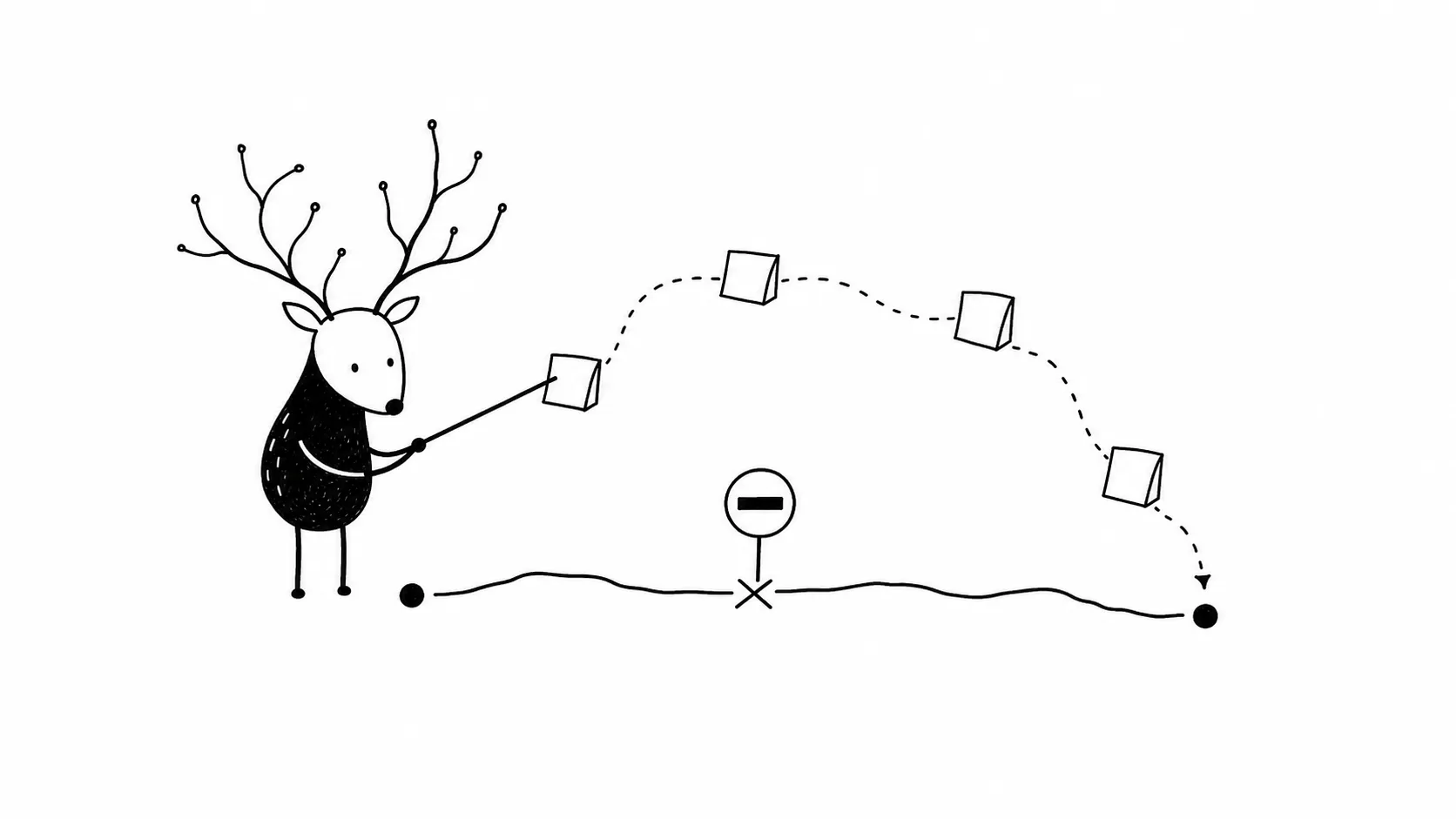
The shortest geographic path is not always the path BGP chooses.
Solving latency therefore requires more than choosing a closer cloud region. It requires understanding — and, where possible, controlling — how traffic flows between networks. This is what BGP multi-homing provides: the ability to influence path selection rather than accepting whatever route your single upstream provider happens to use.
Layer 3 — The Bandwidth Tax
The third layer is the most financially visible but least understood: bandwidth cost inefficiency.
Internet traffic flows through two fundamentally different types of economic arrangements:
- Transit: Paid upstream bandwidth provided by cloud or ISP providers. Every gigabyte costs money. This is the default for most cloud deployments.
- Peering: Direct interconnection between networks, typically settlement-free or at near-zero marginal cost. Requires presence at shared exchange points and bilateral agreements.
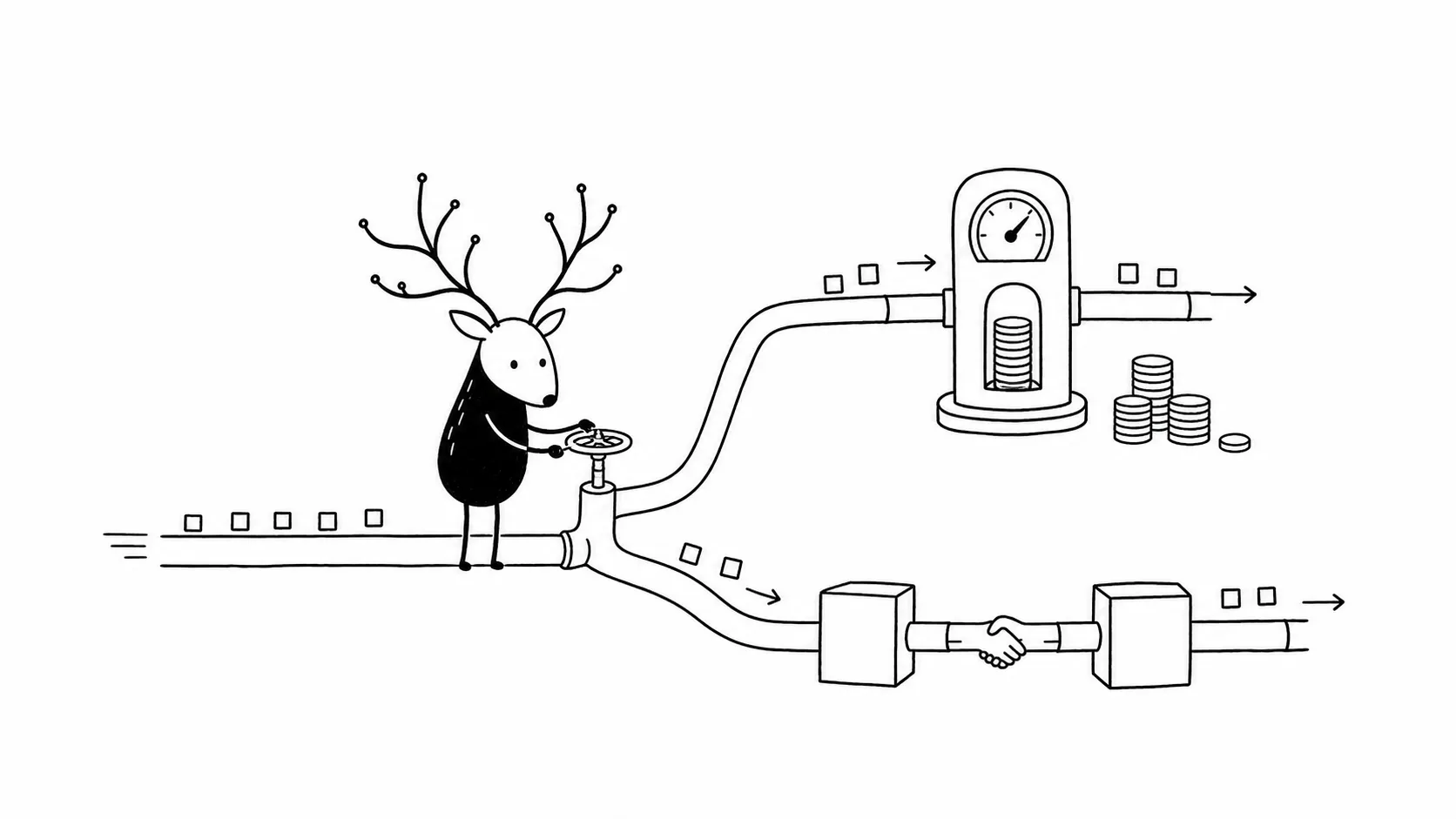
Bandwidth economics change when traffic can prefer peering and use transit only as fallback.
In many default cloud configurations, nearly all outbound traffic flows through transit paths. This means every additional terabyte of customer traffic translates directly into a line item on the infrastructure bill.
With proper BGP policy configuration, traffic can be directed preferentially through peering relationships, with transit used only as a fallback for global reachability. The difference in cost between these two paths — transit and peering — is not marginal. For traffic-intensive workloads, it can be the difference between infrastructure that scales profitably and infrastructure that scales at a loss.
Bandwidth cost is not driven by traffic volume alone. It is driven by routing decisions between transit and peering.
How the Three Layers Compound
These three taxes do not operate in isolation. They reinforce each other.
A shared IP range (Layer 1) makes it harder to establish peering relationships (Layer 3), because settlement-free peering typically requires your own address space. Without peering, more traffic flows through paid transit (Layer 3), which increases costs. And without BGP multi-homing (Layer 2), you cannot control which transit paths your traffic takes — so you pay for routing inefficiency without the ability to fix it.
The reverse is also true: solving one layer creates leverage for the others. Own IP space enables peering. BGP multi-homing enables routing optimization. Peering reduces transit costs.
The three layers are not separate problems. They are three symptoms of a single architectural decision: whether you control your own network identity and routing policy.
Solving the Three-Layer Tax
The common thread across all three layers is ownership.
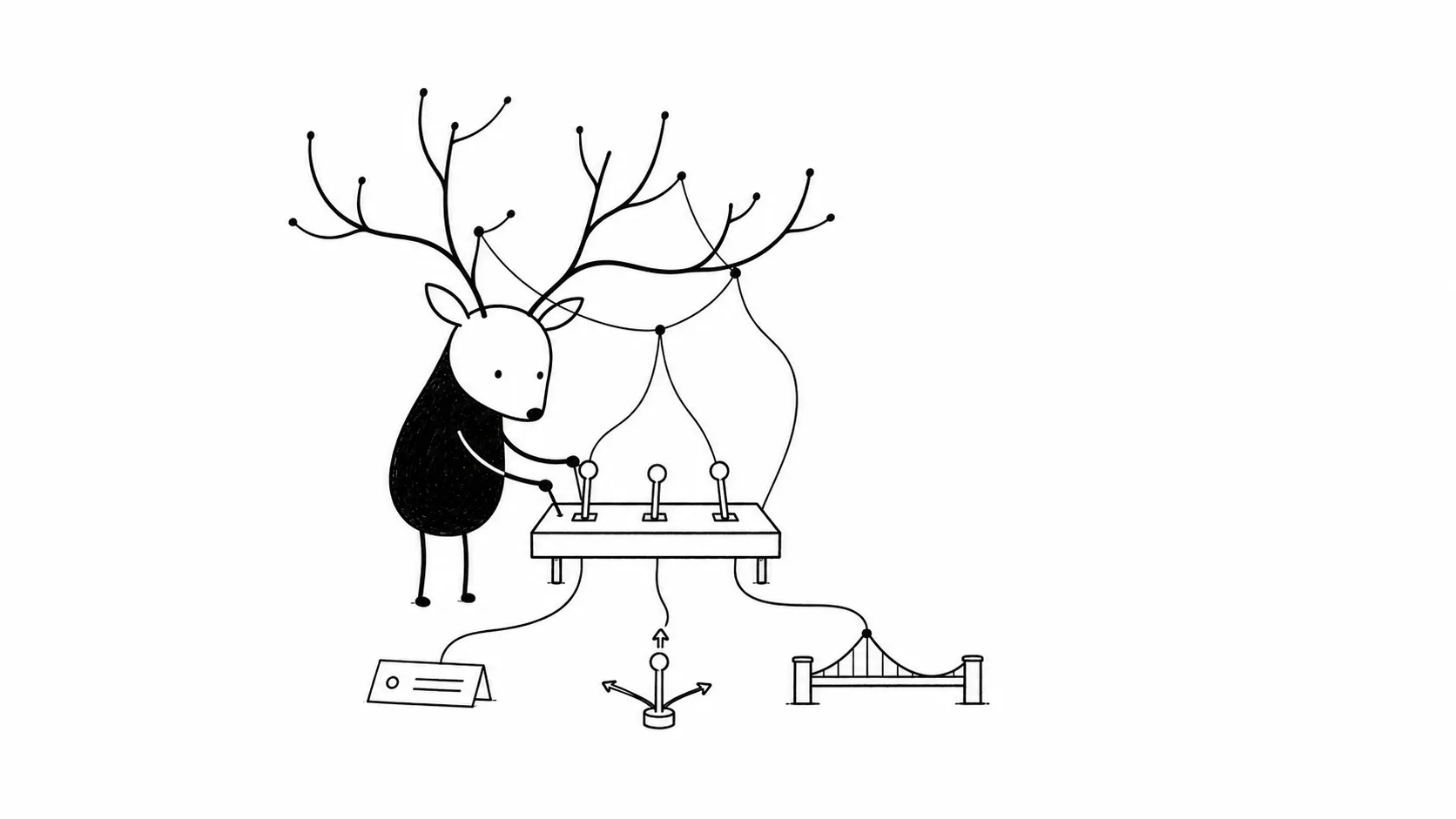
The three-layer tax becomes manageable when identity, routing, and peering are under your control.
Layer 1 (IP Reputation) requires IP space that is registered to your legal entity — an Autonomous System Number (ASN) and IPv6 prefix that carries your organization's identity in the global routing table. When enterprise security systems evaluate your traffic, they see a known entity with traceable ownership, not an anonymous shared range.
Layer 2 (Routing) requires BGP multi-homing — the ability to establish direct sessions with multiple upstream providers and define routing policy. This transforms routing from something that happens to you into something you control.
Layer 3 (Bandwidth) requires peering relationships — the ability to direct high-volume traffic through settlement-free paths rather than paid transit. This is only possible when you control your own IP space and routing policy.
These three capabilities are precisely what the RIPE NCC LIR sponsorship model was designed to provide — without the €1,000 sign-up fee, €1,800 annual LIR fee, and applicable resource fees of direct RIPE NCC membership in 2026 (as documented in the RIPE NCC Charging Scheme). Under the Sponsoring LIR framework, organizations can obtain their own ASN and IPv6 resources through an accredited LIR, with the LIR handling registry compliance while the end organization retains full routing control.
The economics are worth examining directly: the cost of solving all three layers through LIR sponsorship is approximately €89 per year — less than a typical monthly cloud bill for a small production deployment.
References and Further Reading
- RIPE NCC Charging Scheme — Public documentation of RIPE NCC membership fees and resource charges. ripe.net/manage-ips-and-asns
- RIPE-738: Sponsoring LIR Policy — The policy framework under which Sponsoring LIRs operate within the RIPE NCC service region. ripe.net/publications/docs/ripe-738
- Cloudflare Plans and Pricing — Published pricing for Cloudflare Pro, Business, and Enterprise plans. cloudflare.com/plans
- Hurricane Electric BGP Toolkit — Public BGP routing analysis, prefix visibility, and ASN lookup. bgp.he.net
- RIPEStat — RIPE NCC's public platform for routing data, prefix analysis, and BGP monitoring. stat.ripe.net